Skip to content

Research Library

Research and Projects


Stay informed about HRI’s work to advance the hydropower industry.

  • Project

ANL Bearing Degradation Model Testing

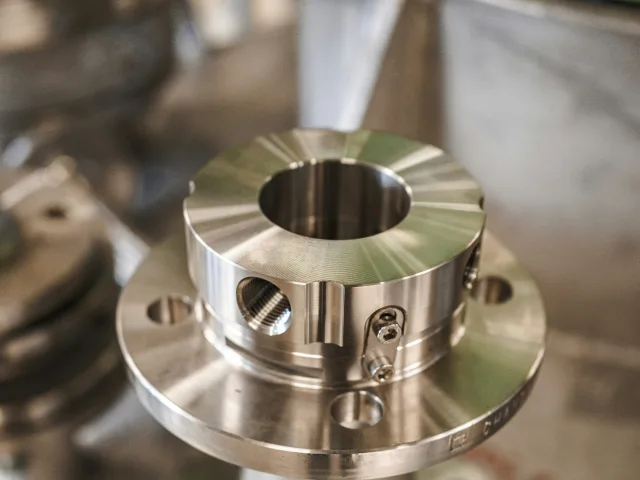
HRI tested an AI-based bearing degradation model developed by Argonne National Lab using hydropower data from the HRI Platform to evaluate whether it could help members identify early signs of declining bearing health.
  • Use Case

Bearing Failure Signatures Use Case

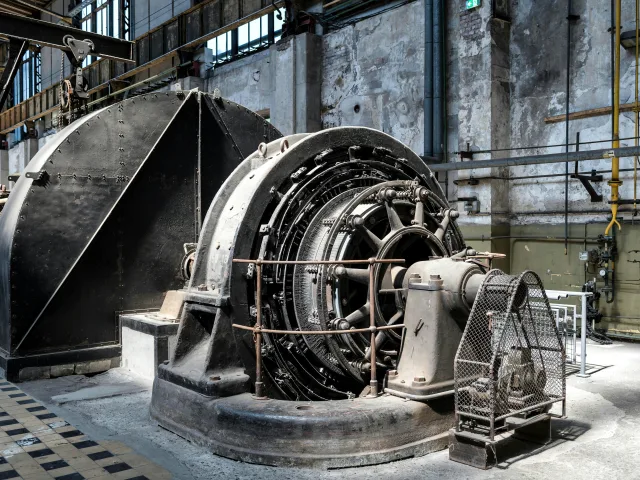
To help our members stay on top of their bearing health, HRI has completed an analysis of Bearing Failure Signatures, focused on identifying failure signatures in sensor data prior to the occurrence of bearing failures.

  • Use Case

Weighted Hours Use Case Analysis

Not all generating units are created equal. Different operating conditions lead to variances in lifespan of units, even within a single powerhouse. With the consistent tracking of operational scenarios through use of weighted hours equations, members will be able to assess the impact of specific operational habits and adjust their actions to improve the lifespan of their units.

  • Project

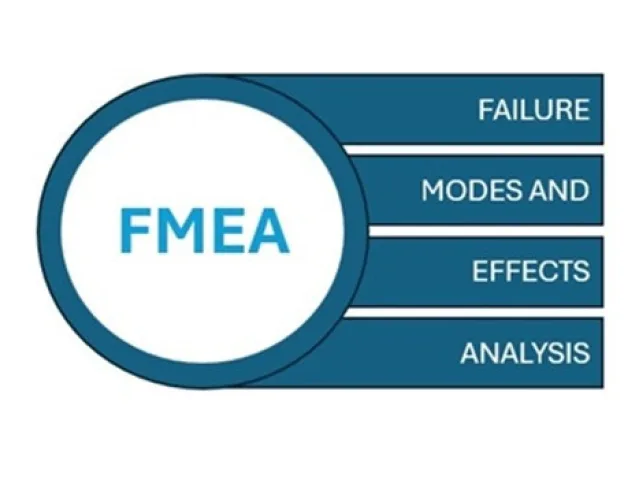
Turbine/Generator Guide Bearing Failure Mode and Effects Analysis (FMEA) Project

Understanding why failures occur and their results help hydropower organizations to make more informed decisions about preventative and corrective maintenance. A Failure Mode and Effects Analysis (FMEA) is a systematic and proactive risk assessment methodology designed to identify and prevent potential failures before they occur.

HRI conducted a joint-utility FMEA in which members were assessed individually and as a group to maximize insights from the analysis.

  • Article

Collaboration Forum 2025

Representatives from all HRI utilities attended this year’s 2025 HRI Collaboration Forum where we also had presentations from HRI partners. We talked about various HRI projects such as LLM and the Bearing FMEA and discussed ideas for future projects.  The results of last year’s use case studies were presented, and we discussed what next steps might be interesting given the results. 

  • Article

HRI 2024 Annual Report

HRI developed its first annual report for the 2024 calendar year. Some highlights include: 

  • Data: The HRI Platform onboarded 26 new units and expanded to begin collecting maintenance data.
  • Coaching: New in-person and online platform training was created, and HRI worked with each member to execute a use case to analyze an area of importance to each organization.
  • Collaboration: HRI created a member portal to securely access published HRI documents and a discussion board to collaborate with colleagues in different organizations to discuss issues, challenges, and best practices. 

Learn more and read HRI's annual report here: 

HRI 2024 Annual Report

  • Article

HRI 2025 Annual Report

HRI developed its annual report for the 2025 calendar year. Some highlights include:

  • Data: The HRI Platform expanded to incorporate maintenance event data alongside existing operational and outage data, enabling members to compare and optimize maintenance practices. The platform now holds 677GB of data, 10,880 data points, 147,245 outage events, and 30,138 maintenance events.
  • Coaching: HRI offered both basic platform and advanced analytical training, helping members build skills and get more value from the dataset. Use case analyses tracked unit starts/stops and rough zone operations, as well as digital signatures in bearing failures.
  • Collaboration: HRI completed a cross-organizational Failure Modes and Effects Analysis (FMEA) on turbine and generator guide bearings, bringing together data specialists, asset managers, and site operations teams to compare risk and mitigation strategies. HRI also tested large language models (LLMs) for automated outage cause code assignment, and the Technical Collaboration Group drove discussions on the complex technical challenges facing the industry today.

Learn more and read HRI's annual report here: 

HRI 2025 Annual Report

  • Use Case

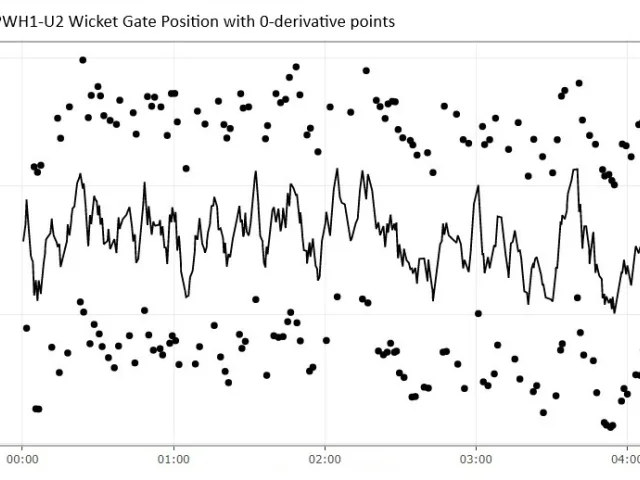
Wicket Gate Cycling Use Case

An HRI member completed an analysis of wicket gate cycling across HRI members.  This use case was the 2nd in a long-term analysis meant to gather information about wicket gate cycles and the impact cycling has on the wear and tear of wicket gate bushings, linkages, and operating mechanisms.  The results of their analysis have been published and are available to all HRI members. 

  • Project

Dispatching and Unit Health Use Case Analysis

An HRI member completed an analysis of dispatching and ramping and how it correlates to unit health.  The objective of the use case was to gain a greater understanding of the impacts ramping may have on a unit and if it is directly related to the number of unit outages.  The results of their analysis have been published and are available to all HRI members. 

  • Use Case

Stator Bar Failure Analysis Use Case

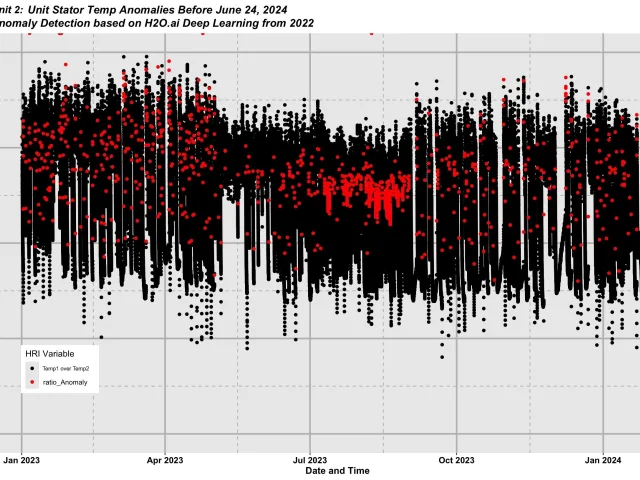
An HRI member completed an analysis of stator bar failures.  The objective of the use case was to see if deep learning algorithms could be used to identify stator bar anomalies. The results of their analysis have been published and are available to all HRI members. 

  • Use Case

Turbine Bearing Failure Anomaly Detection Use Case

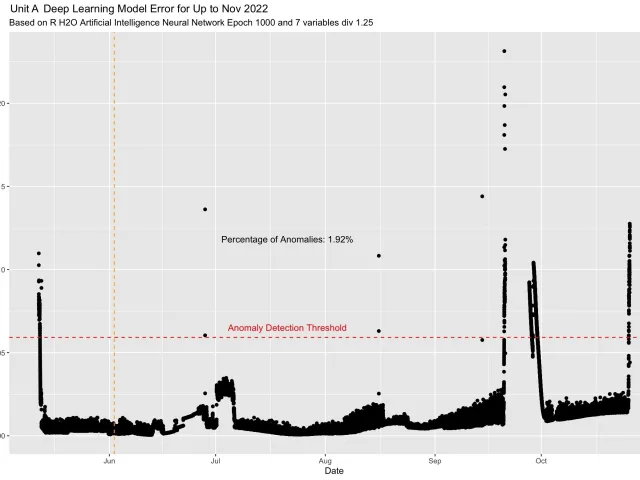
An HRI member built a neural network, deep learning model to retroactively look for anomalies in the turbine guide bearing leading up to a known issue. The objective of the use case was to identify the variables which effect the turbine guide bearing and to try and create a model that could be used in the future to predict possible bearing issues. The results of their analysis have been published and are available to all HRI members. 

  • Use Case

Stator Winding Temperature Use Case

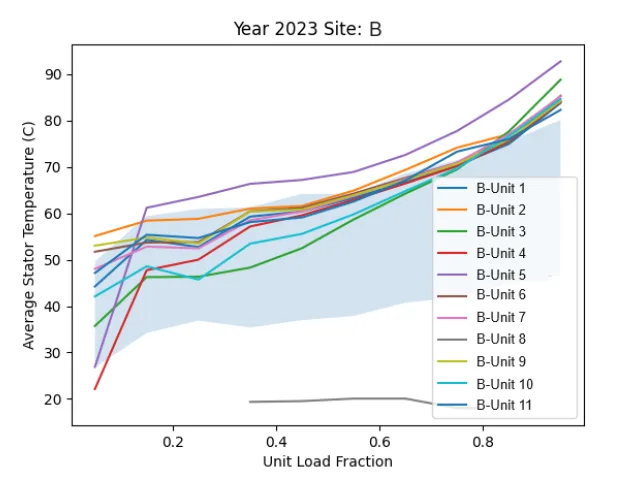
An HRI member completed an analysis of stator winding temperatures to create a comparison of their own temperatures per unit compared to an industry average by unit load.  The objective of the use case was to gain further understanding about the stator windings and see if the information gained could be used to maximize stator efficiencies. The results of their analysis have been published and are available to all HRI members.   

  • Article

HRI 2023 Annual Report

HRI developed its first annual report for the 2023 calendar year. 2023 was a big year for HRI as it expanded its mission in data, coaching and collaboration for HRI members. Some highlights include: 

  • Data: The HRI Platform expanded its tag graphing capabilities to enable on platform graphing and benchmarking.
  • Coaching: Development and expansion of training for members on how to best use the platform and expand their their knowledge around data science and advanced analysis.
  • Collaboration: Data driven outage analysis looked at outage data from across members to identify broad trends, similarities among members, and opportunities for improvement in outage reporting. 

Learn more and read HRI's annual report here: 

HRI 2023 Annual Report

  • Article

New Researchers: Five National Labs

HRI is excited to welcome five National Labs as our newest researchers. Please join us in welcoming researchers: Argonne National Labs (ANL), Pacific Northwest National Labs (PNNL), Oak Ridge National Labs (ORNL), National Renewable Energy Labs (NREL), Idaho National Labs (INL).

Our Research Collaborators Include

Contribute

Research begins with collaboration

HRI members share operational data and co-fund studies that address common priorities and the industry’s most important needs. Join HRI to access our full research library and help shape future priorities.